Why Do Seafarers Wear Anti-Static Coveralls?
The primary reason seafarers wear anti-static coveralls is to adapt to the unique working environment on board ships, mitigate safety risks caused by static electricity, and protect ship equipment and navigation safety. Considering the specific work scenarios of seafarers, the reasons are as follows:
Mitigating risks in flammable and explosive environments on ships: Ships contain areas such as fuel tanks, lubricant storage areas, and chemical cargo holds, where volatile, flammable, and explosive gases and dust are present. During routine operations (such as inspections, maintenance, and loading/unloading), friction from the body (such as clothing rubbing against itself or contact with equipment) can generate static electricity. When static builds up to a certain level, it can produce sparks that easily ignite surrounding flammable and explosive substances, leading to explosions and fires that severely threaten the safety of the vessel, crew, and cargo. Anti-static coveralls use conductive fibers in the fabric to promptly conduct and dissipate static electricity from the body, preventing its accumulation and eliminating such fatal hazards at the source.
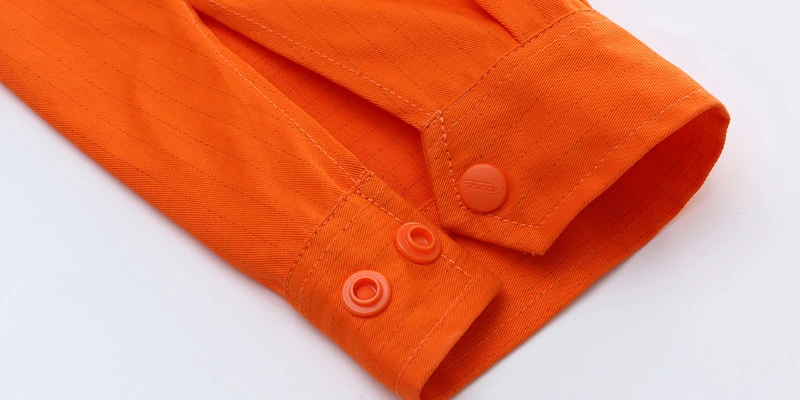
Protecting ships’ precision electronic and navigation equipment: A ship’s navigation systems, communication equipment, and control systems are all precision electronic devices. Static electricity attracts dust and moisture from the air, affecting the operational accuracy of the equipment. It can even cause electronic components to fail or damage the equipment, leading to navigation malfunctions and communication disruptions, which directly impact navigational safety. Anti-static coveralls effectively control the discharge of static electricity from the body, reducing interference with precision equipment. This ensures the normal operation of all types of electronic equipment on board and prevents navigation risks caused by equipment failure.
Comprehensive protection tailored to complex maritime work environments: Crew members frequently need to bend, climb, and conduct inspections. In two-piece anti-static workwear, gaps can form at the waist, cuffs, and collar, which not only allow static electricity to escape but also permit seawater, oil, and dust to penetrate, compromising protective effectiveness. The one-piece design provides full-body coverage with no blind spots, while conforming to the body’s natural movements to maintain crew flexibility. It is suitable for various complex operational environments on ships, including decks, engine rooms, and cargo holds.
Compliance with maritime safety regulations and navigation requirements: The International Maritime Organization (IMO) and national maritime authorities have established clear regulations for safe ship operations. Specifically, for work environments involving flammable and explosive materials or precision equipment, crew members are explicitly required to wear anti-static protective gear. As compliant protective equipment, anti-static coveralls help vessels meet safety inspection requirements, mitigate the risk of non-compliance during navigation, ensure crew occupational safety, and reduce safety hazards during maritime operations.
Shandong Legend Garment Technology Co., Ltd. is a manufacturer of workwear. The “Guardian Angel” brand of anti-static coveralls strictly adheres to authoritative domestic and international safety standards, fully meeting requirements for static protection, safety protection, and industry-specific compliance. Tested and certified by authoritative third-party institutions, all performance indicators meet standard limits, providing reliable safety assurance for workers.


No. 12, Liandong U-Valley, 368 Huanghe West Road, Huangdao District, Qingdao
Copyright © 2026 by Qingdao CHUANQI Escort Technology Co., Ltd. All Rights Reserved