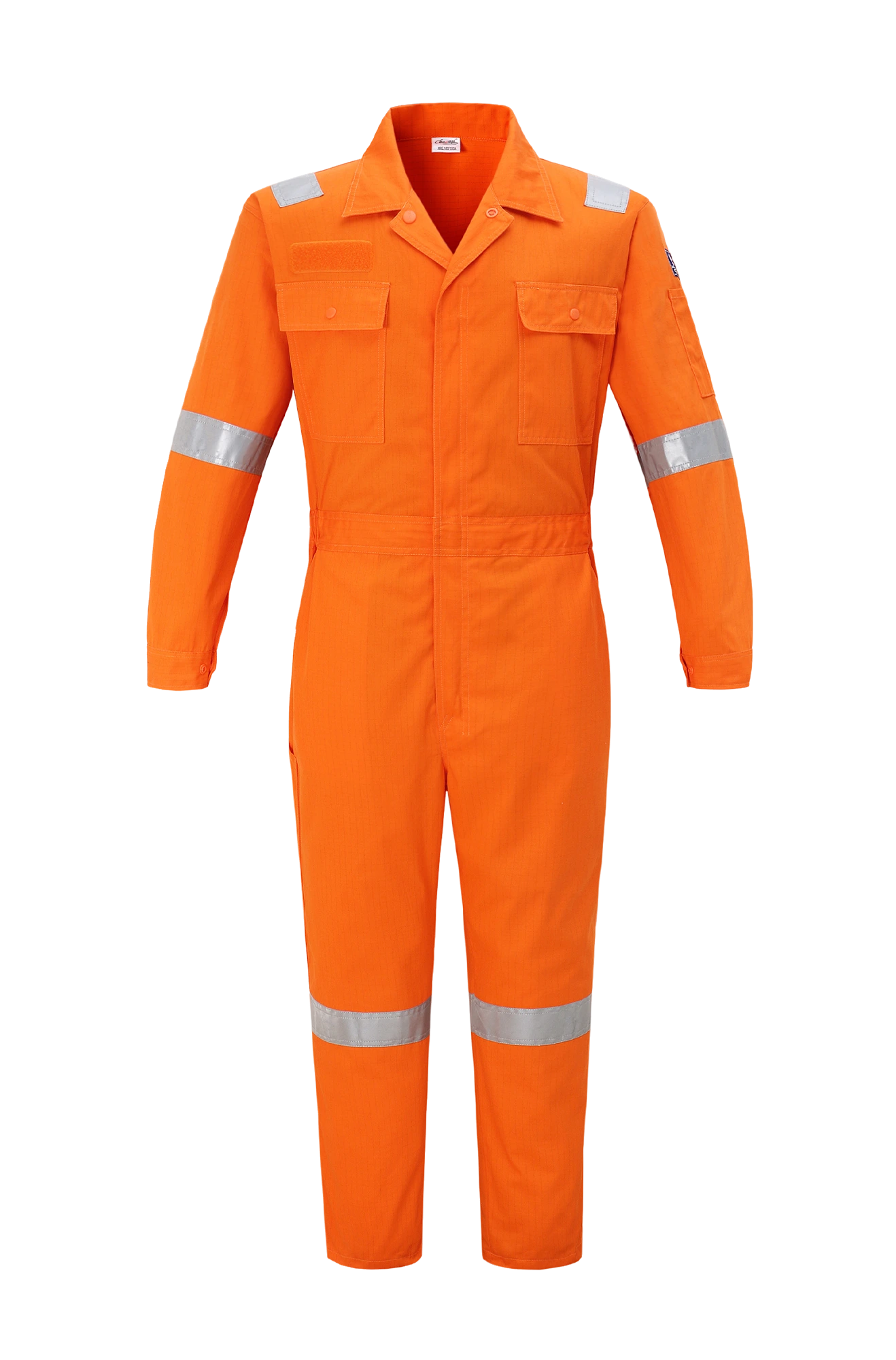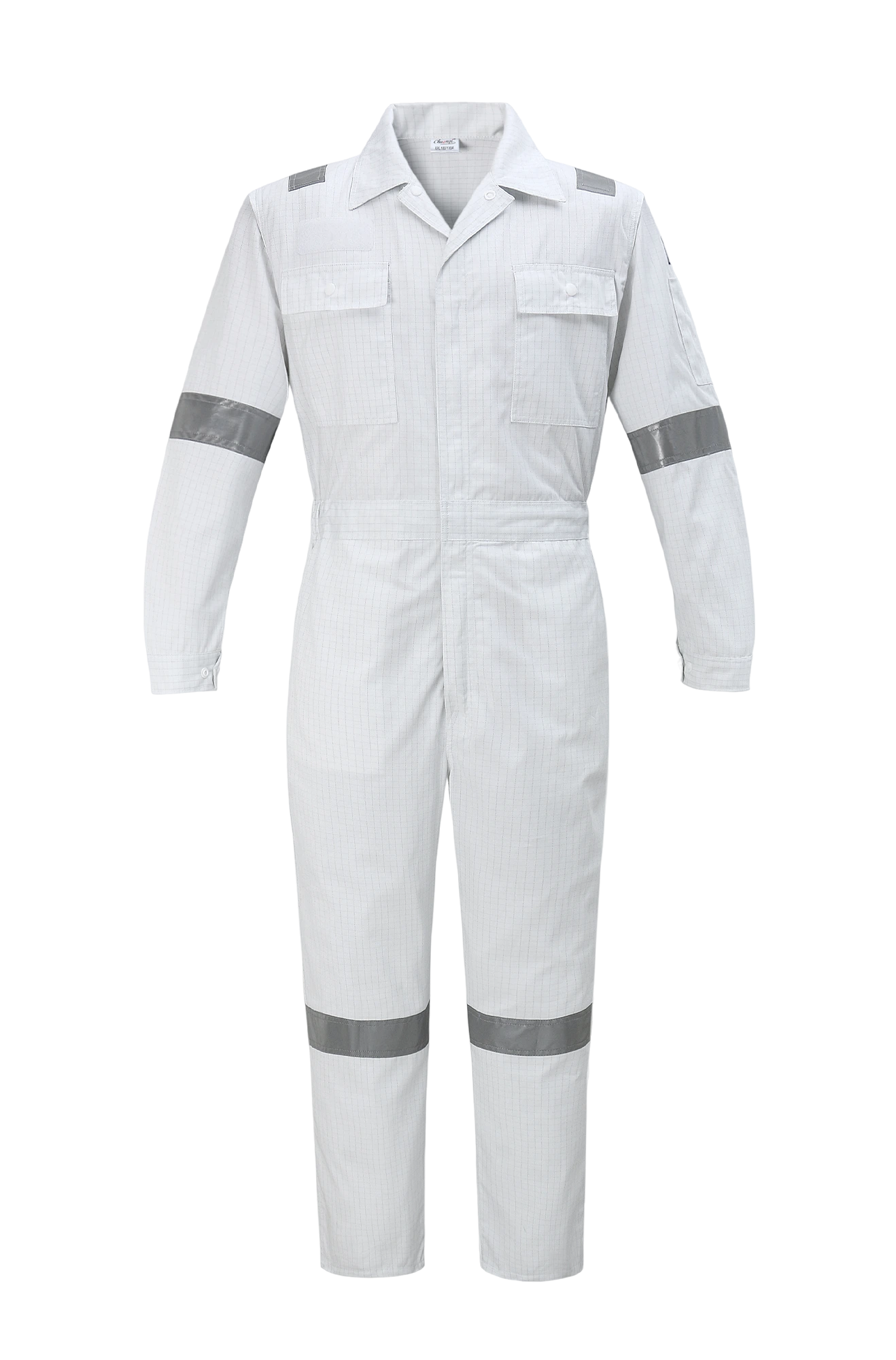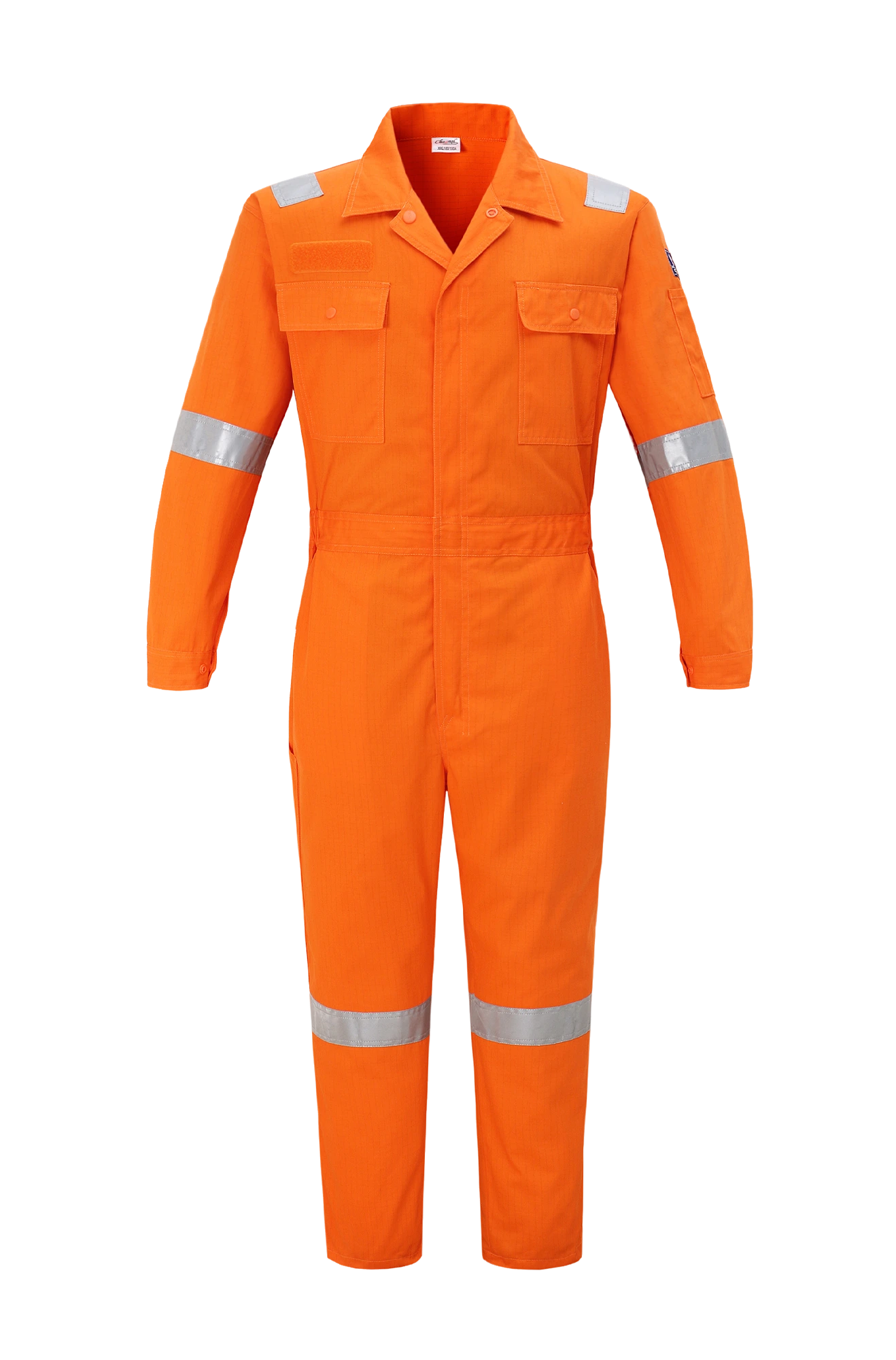
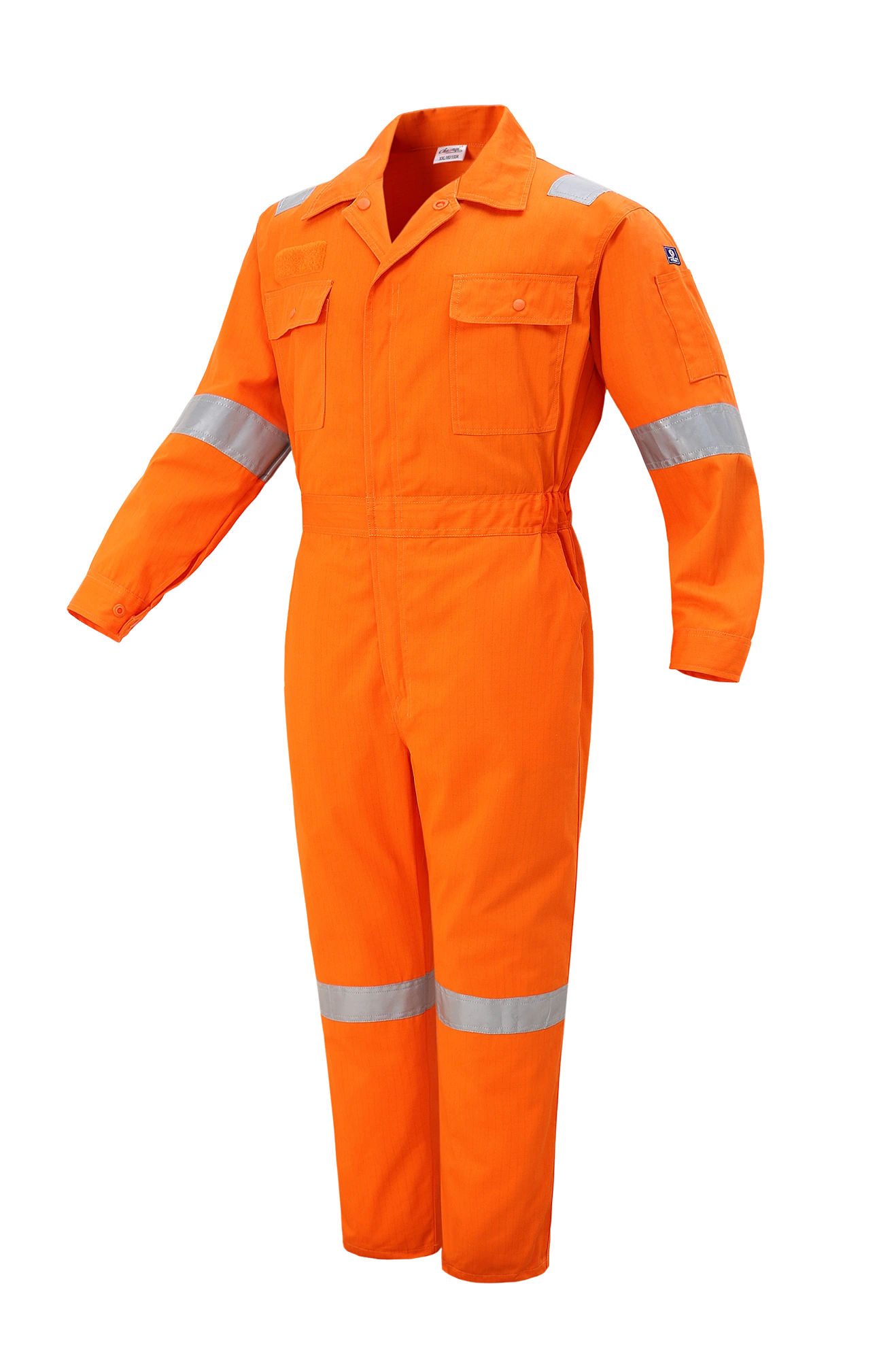
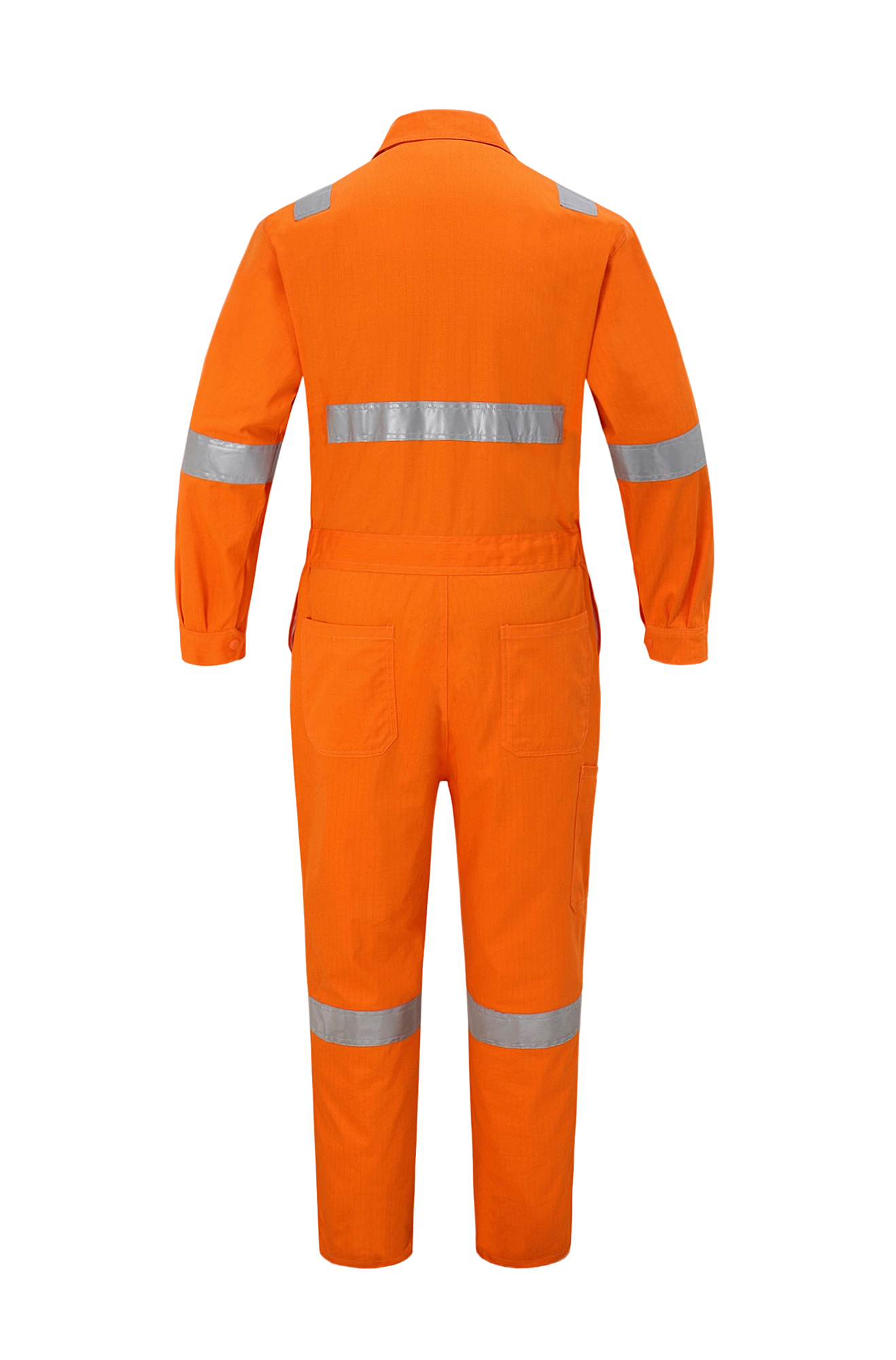
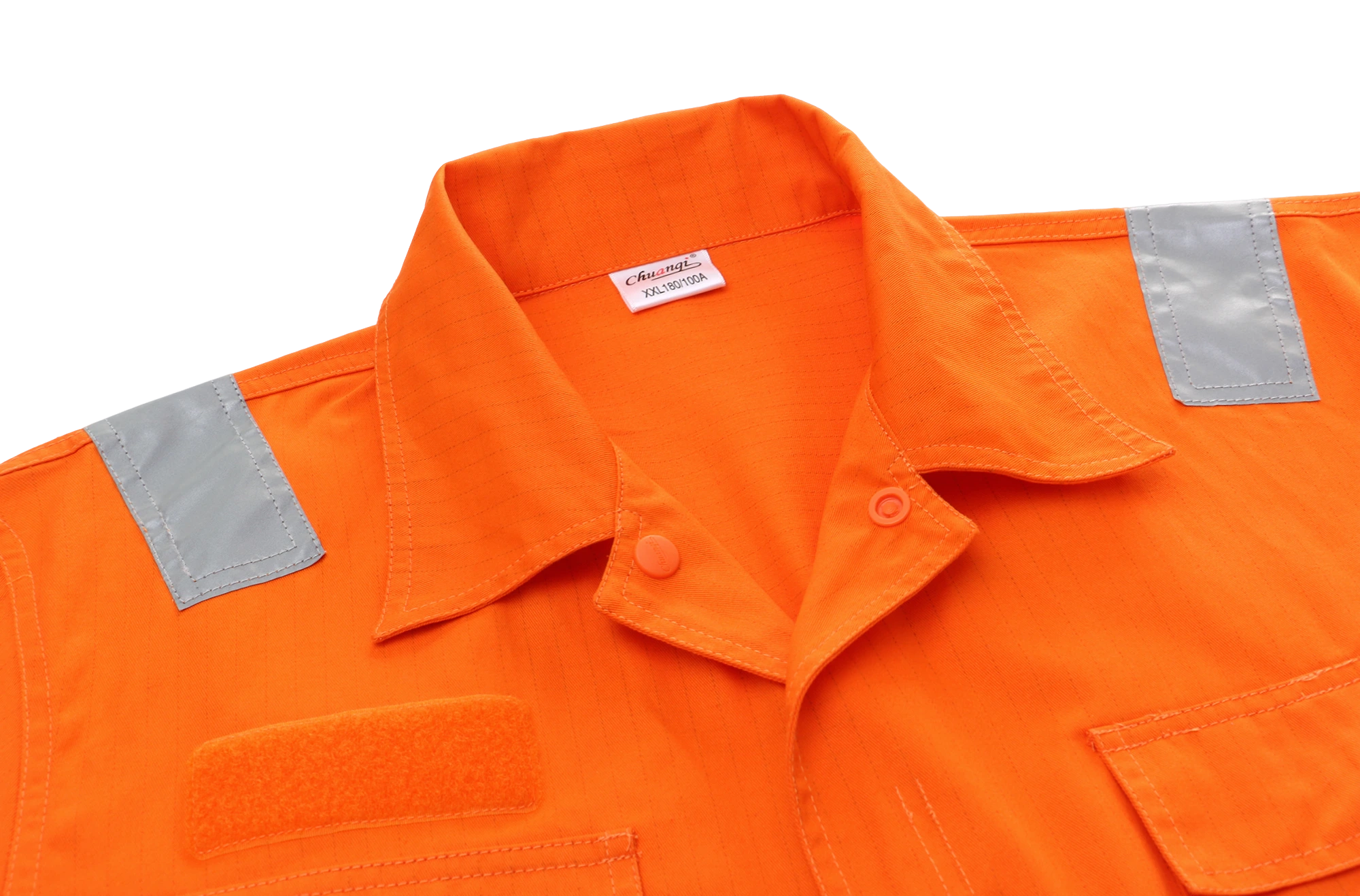
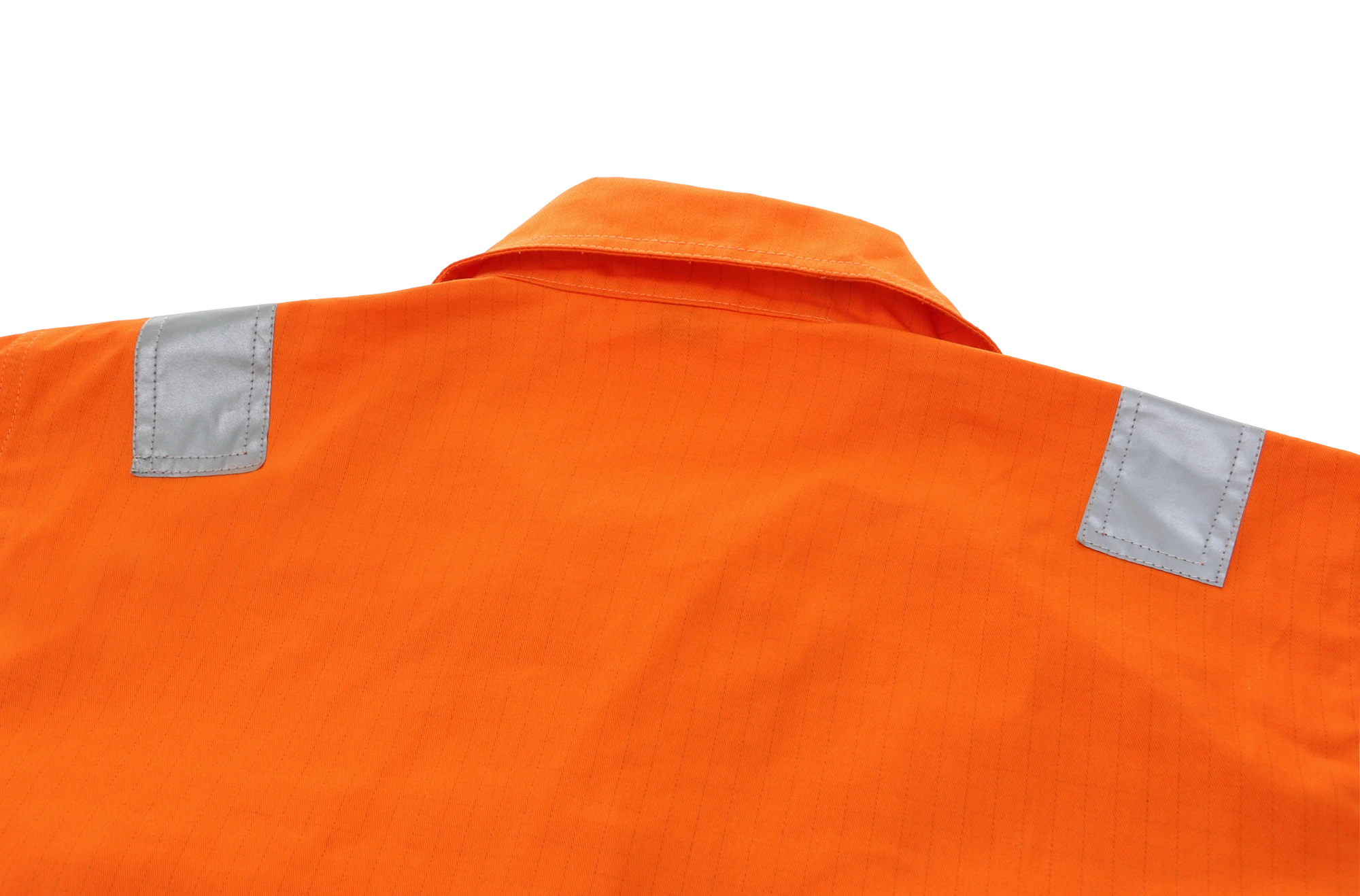
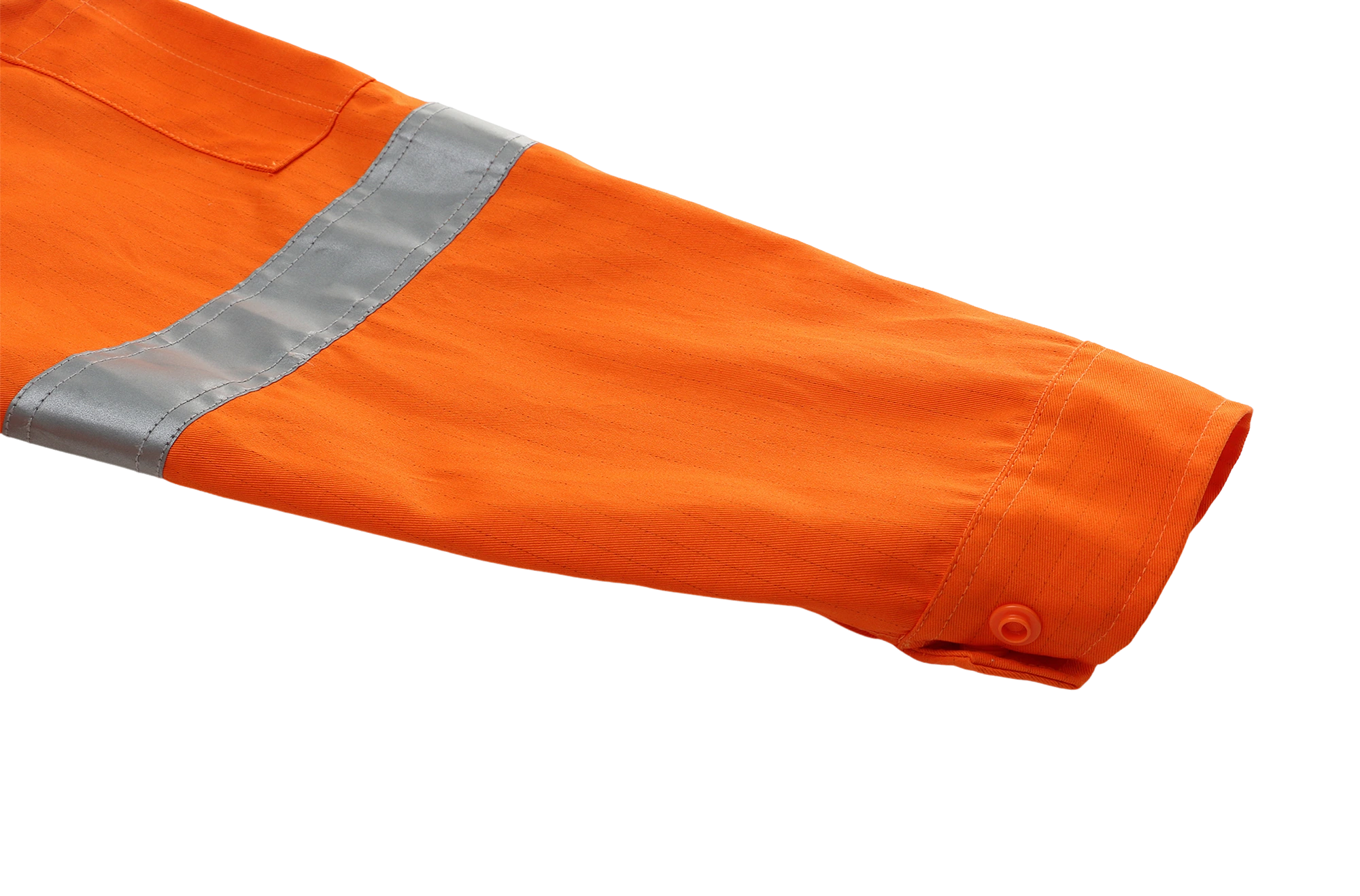
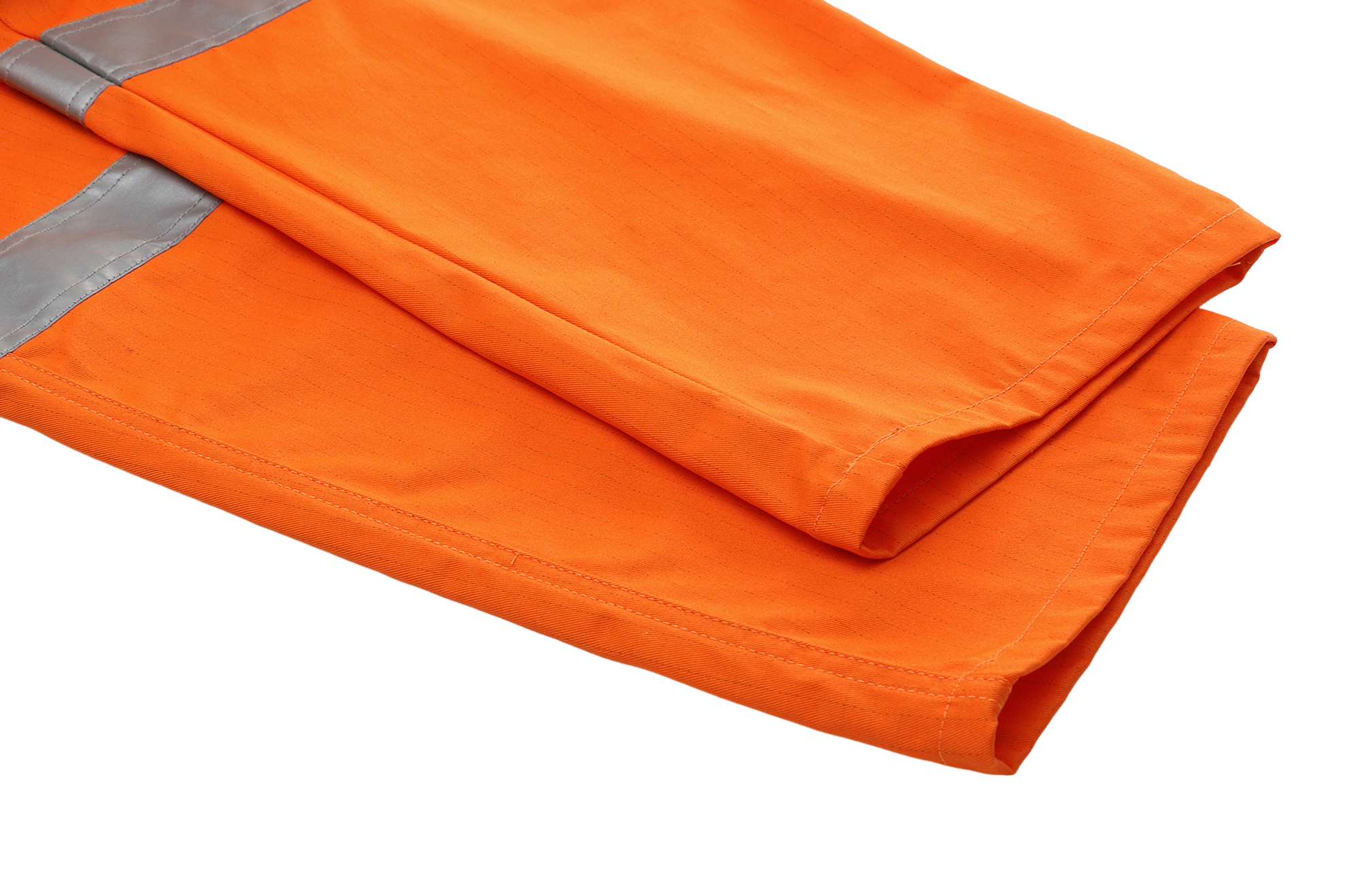
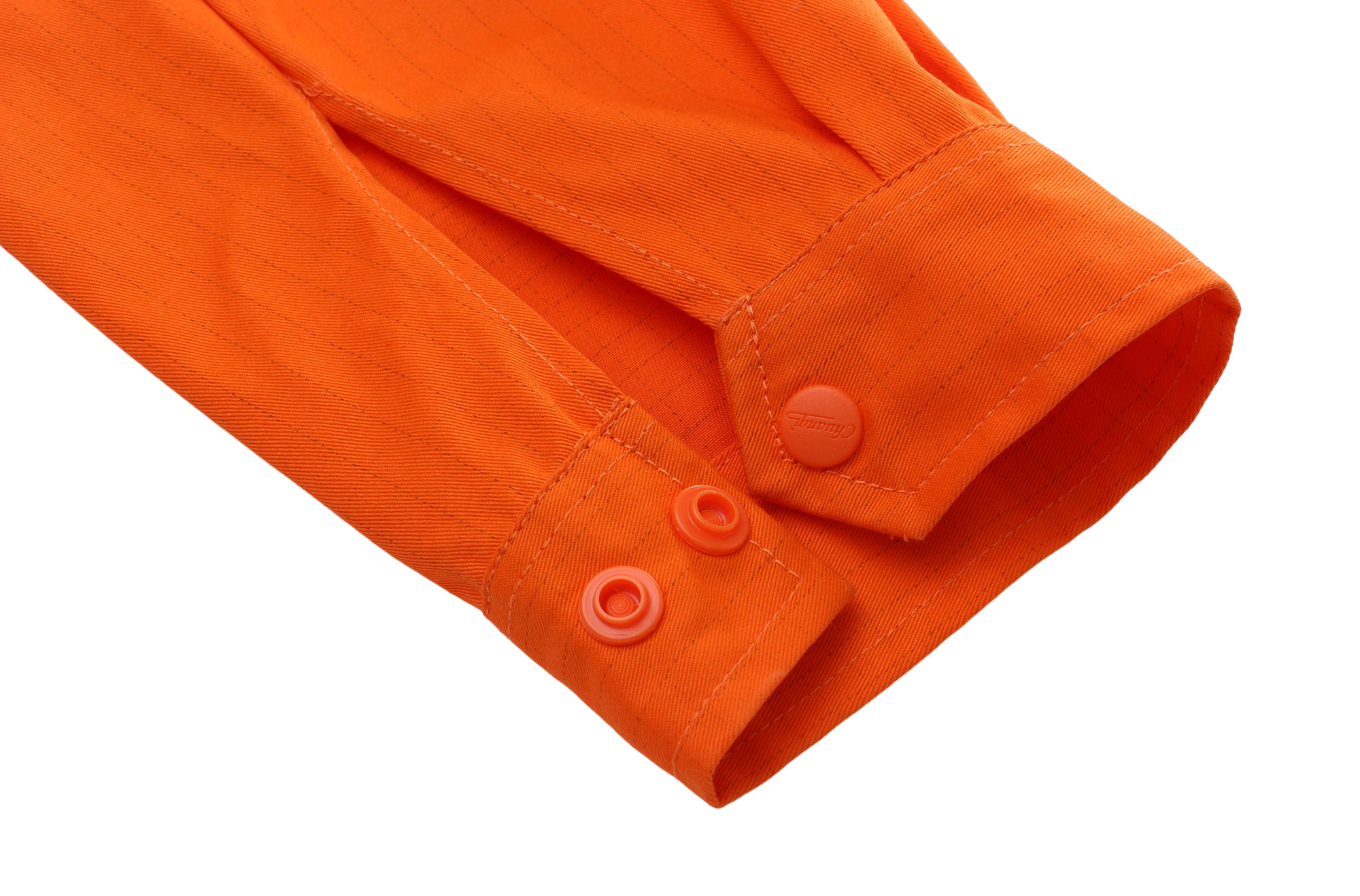
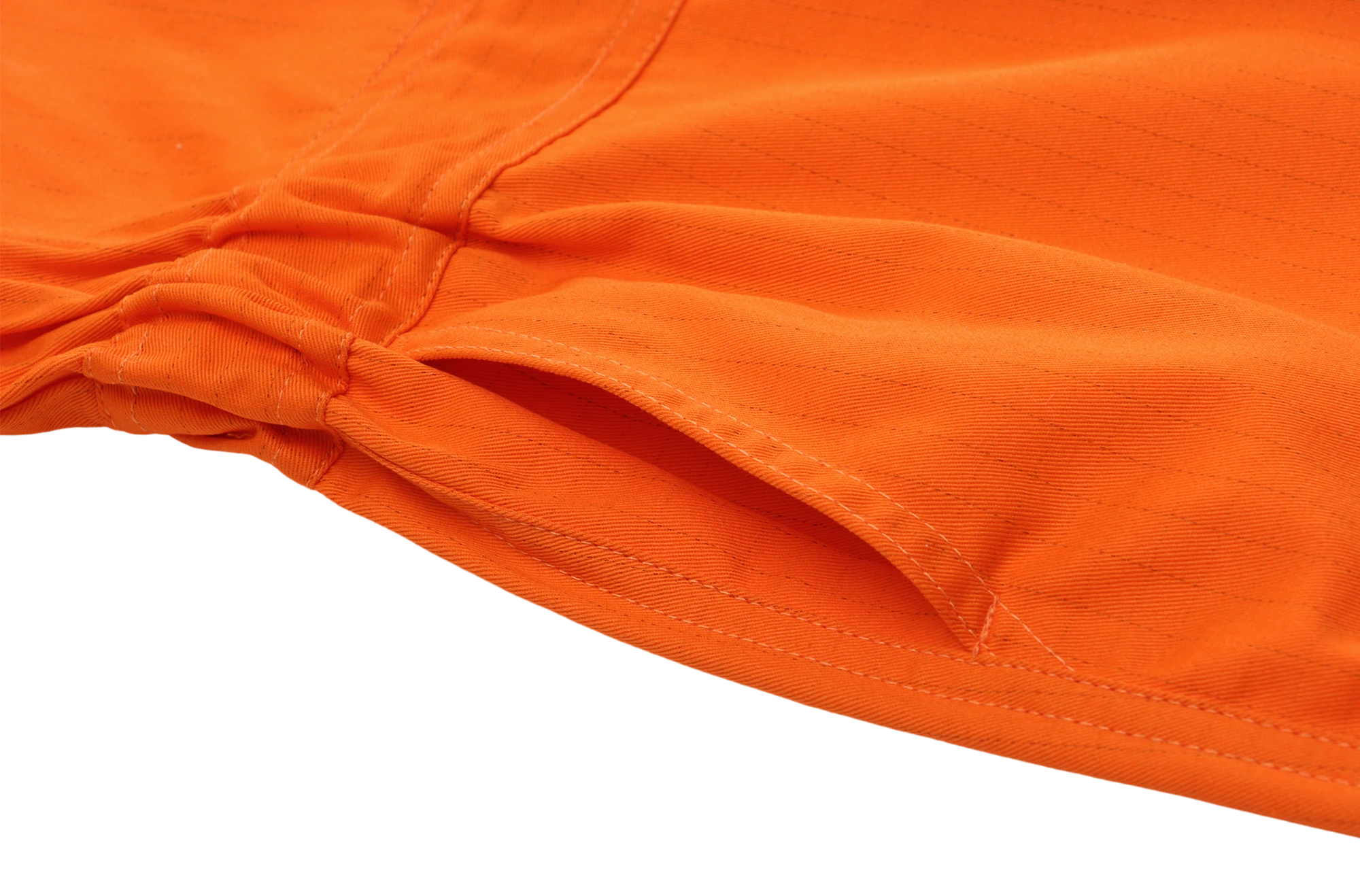
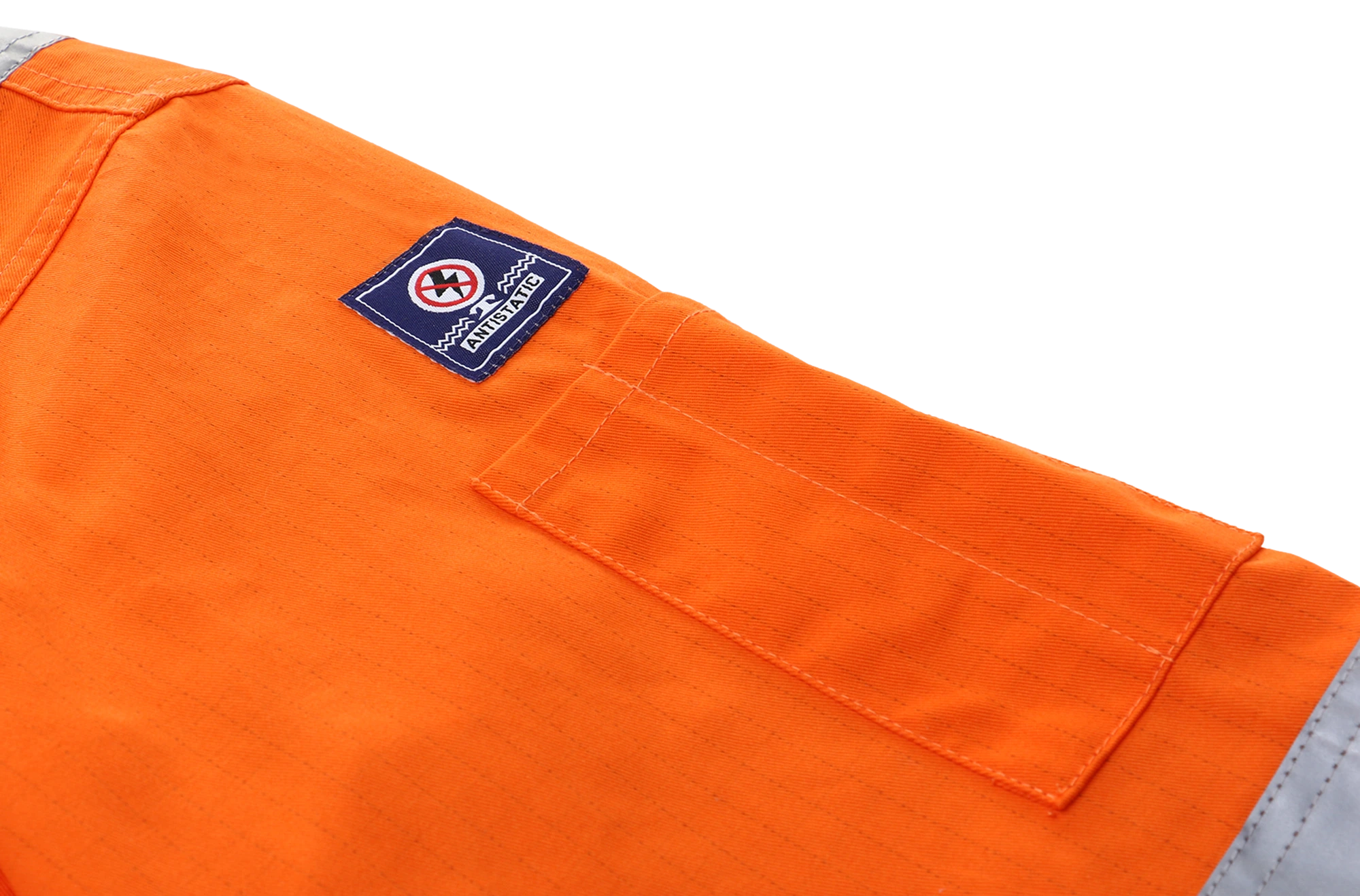
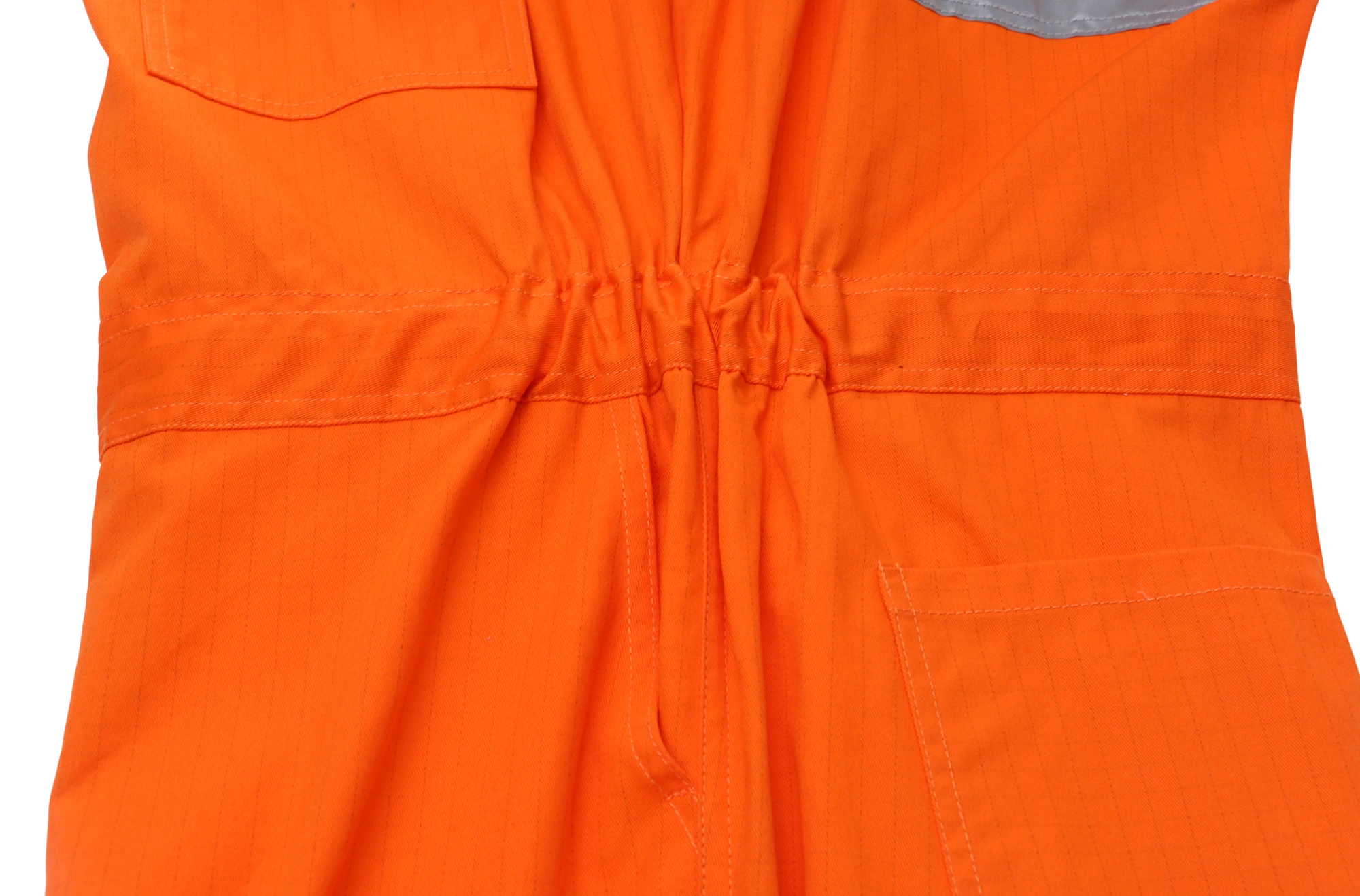
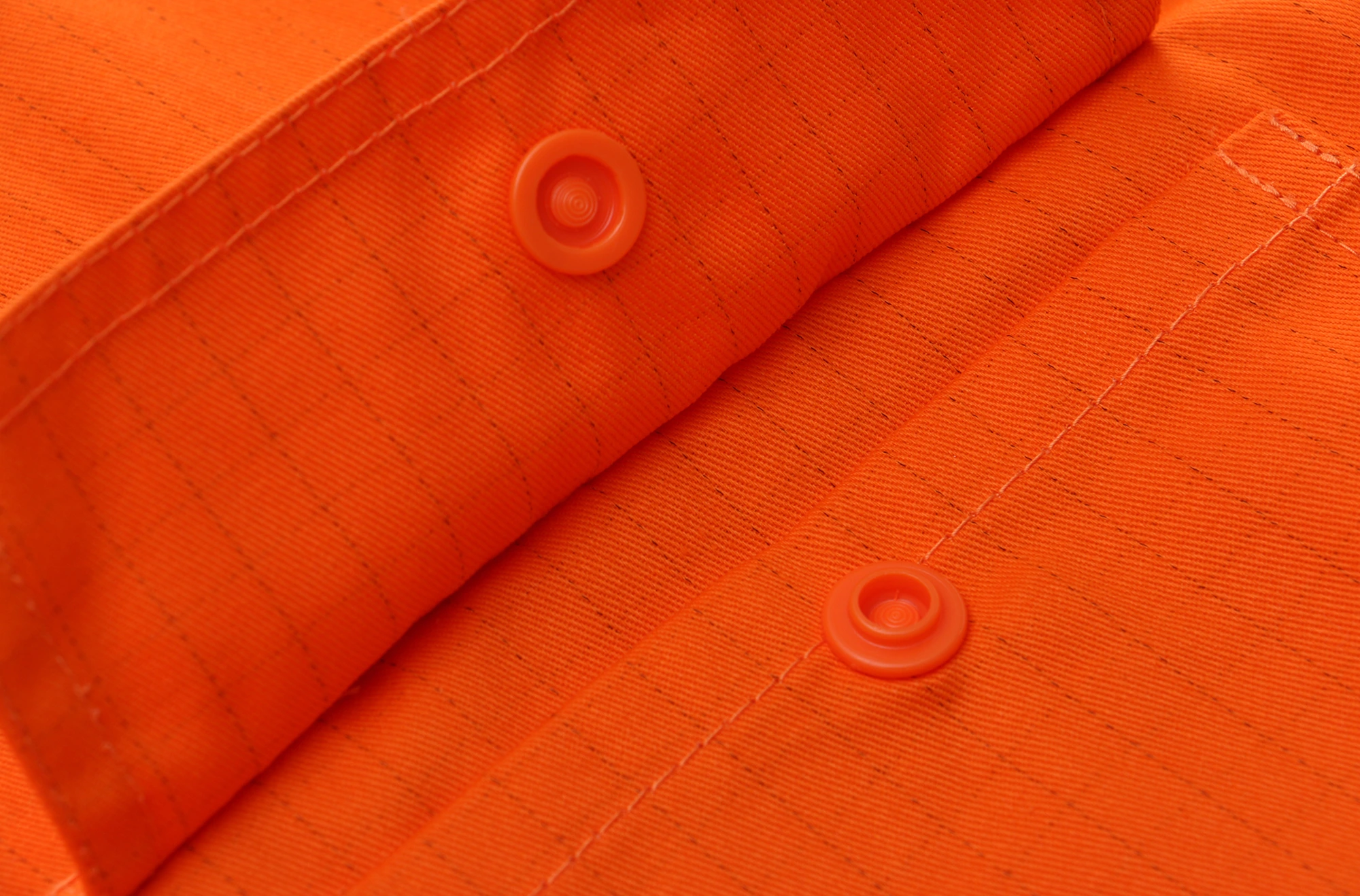
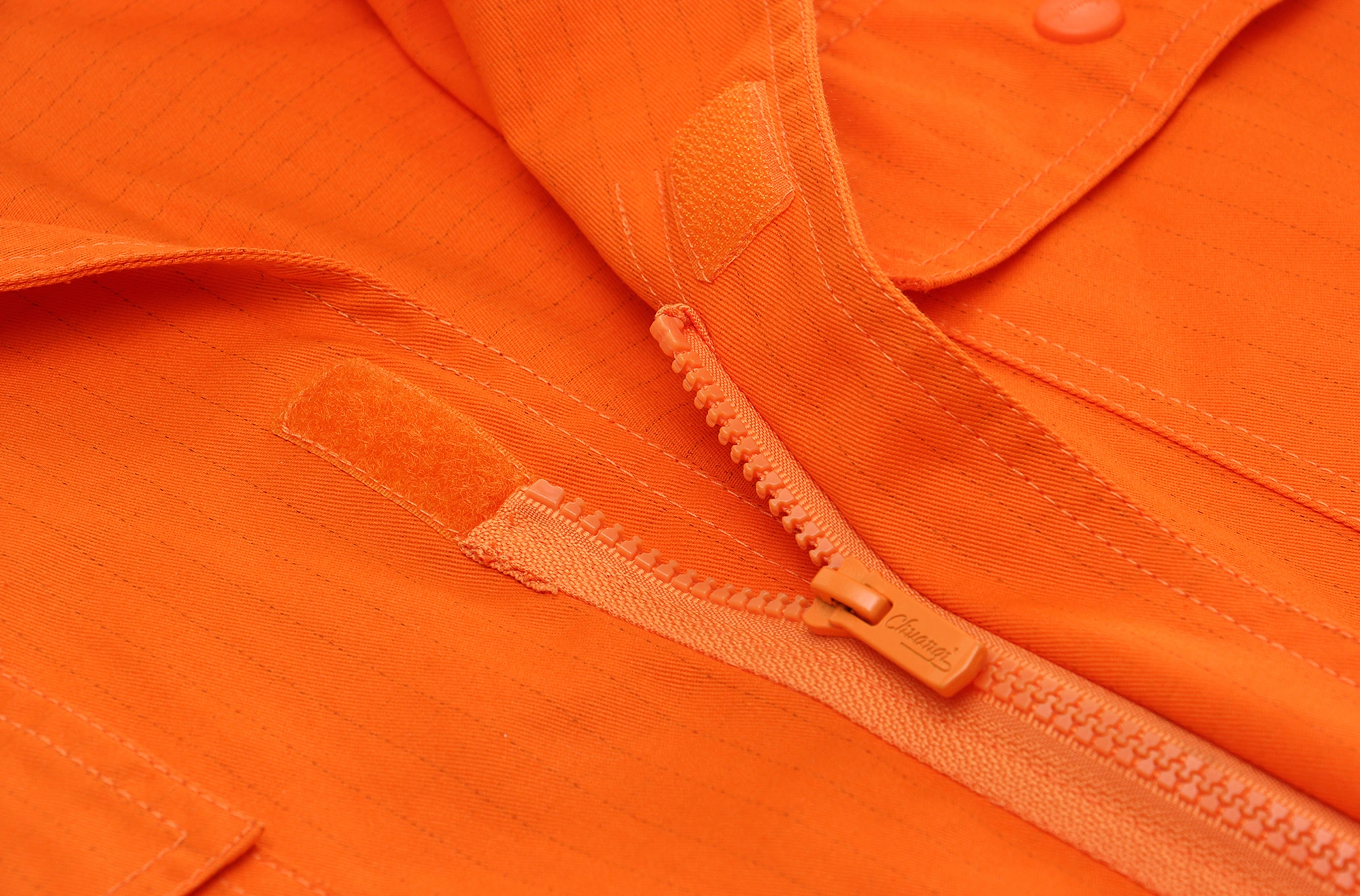
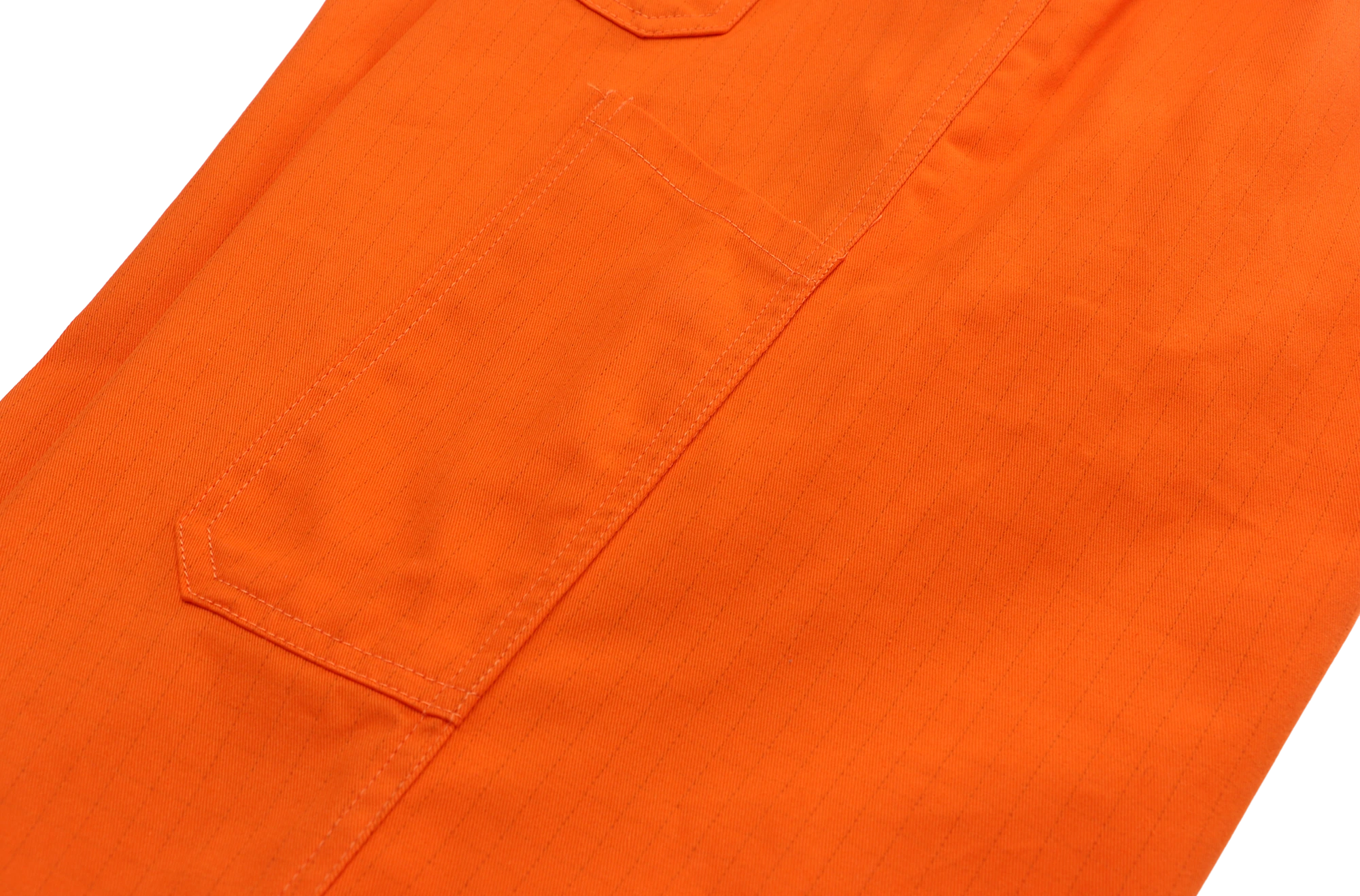
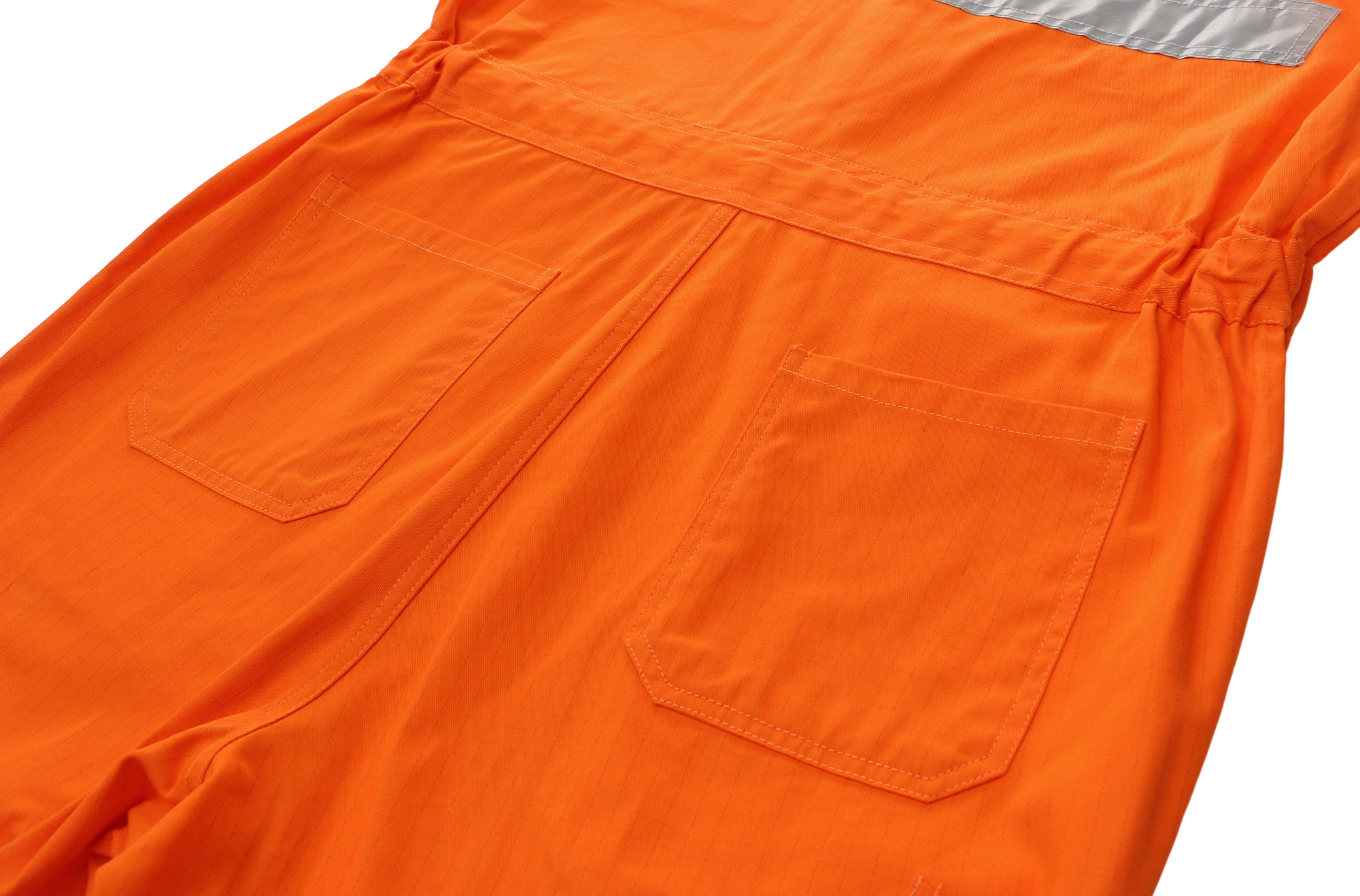
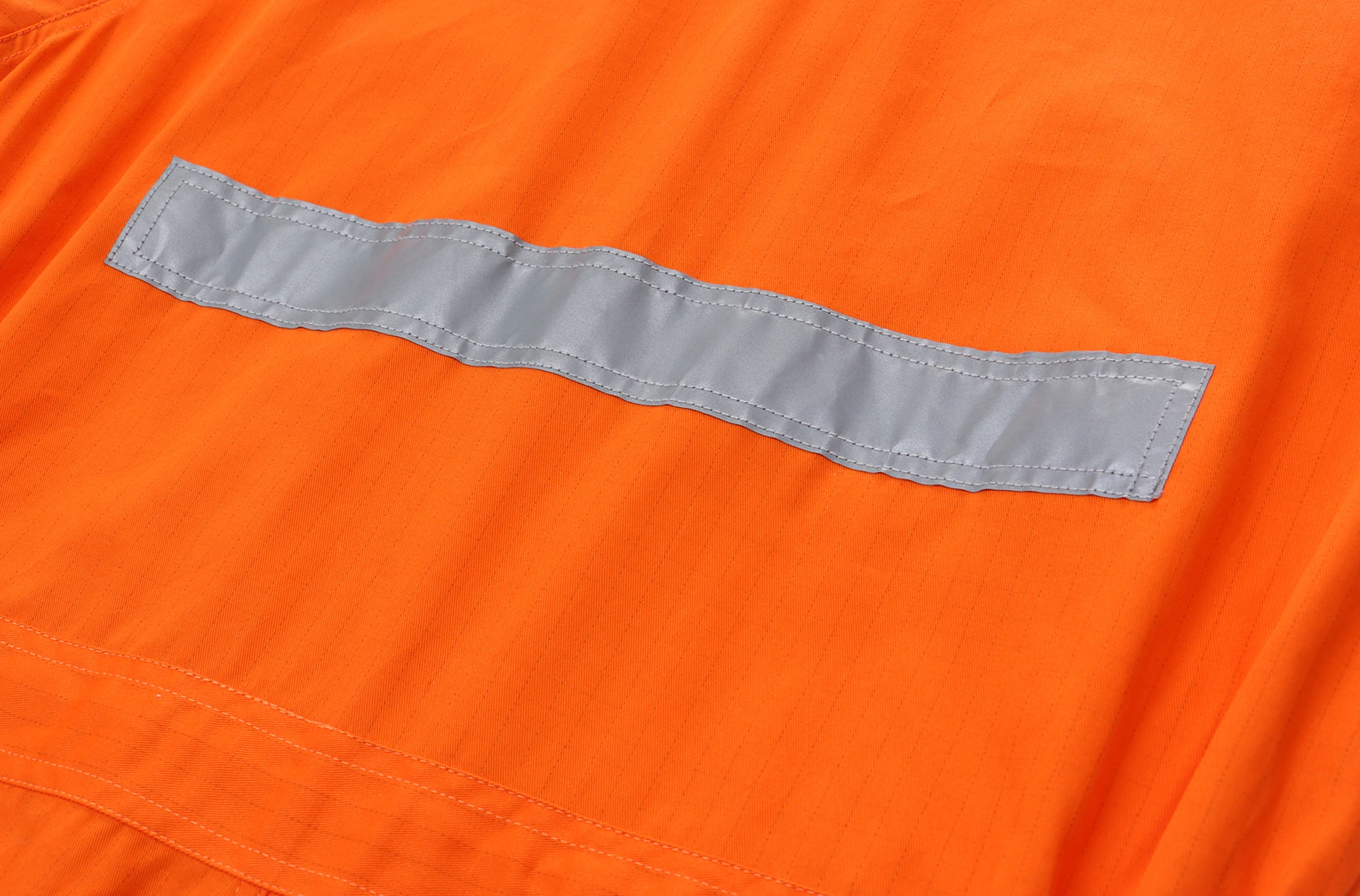
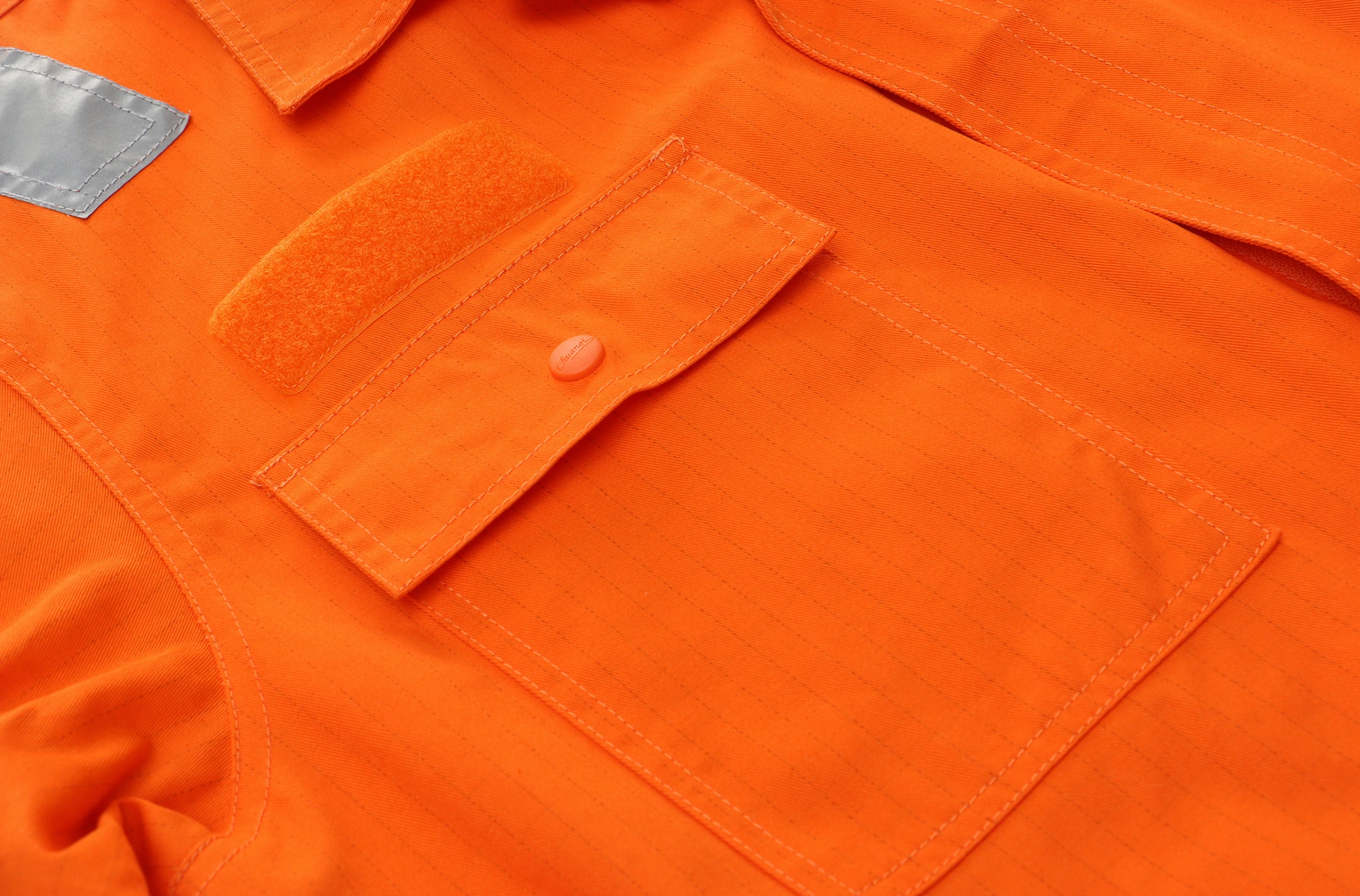
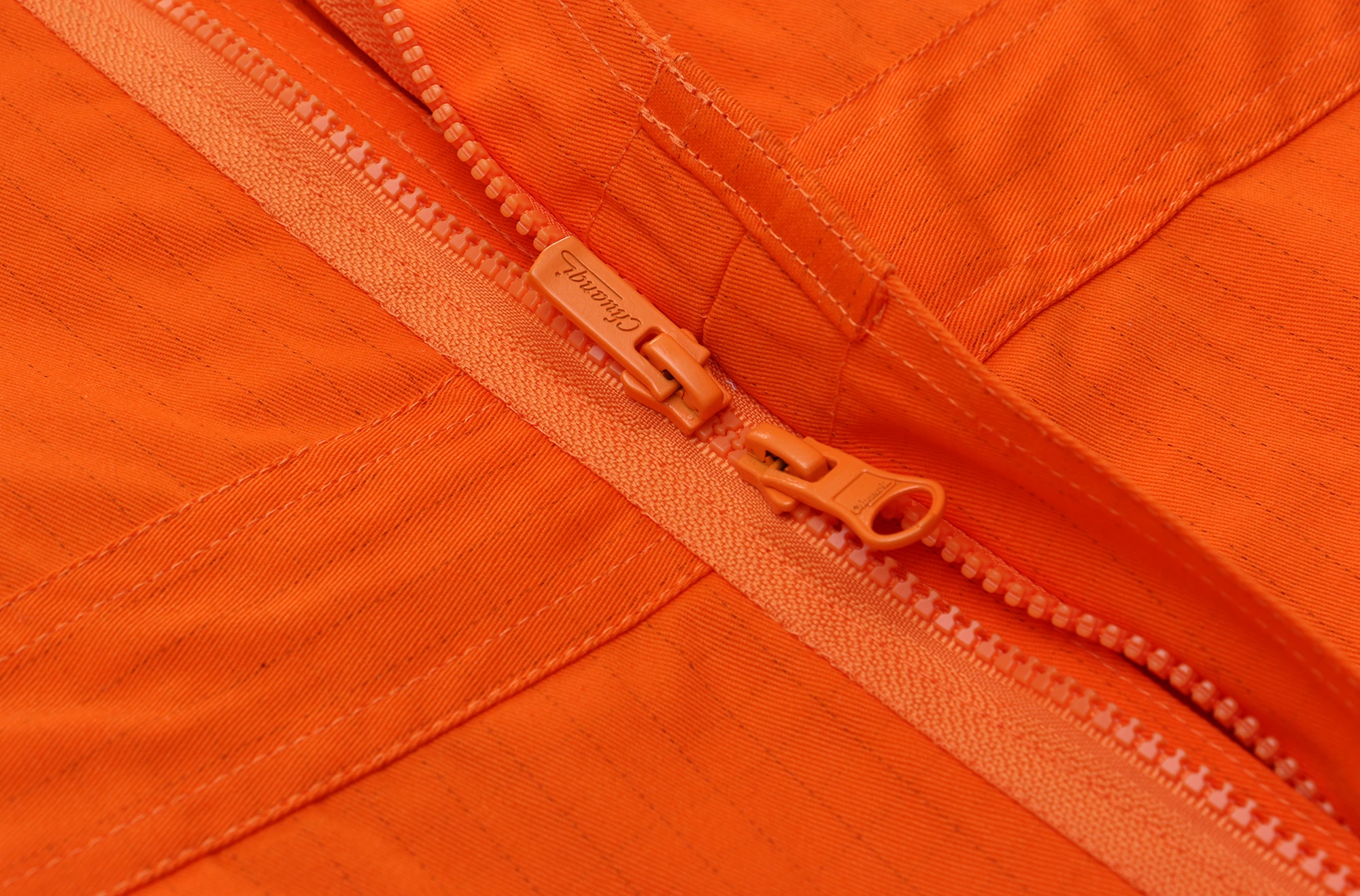
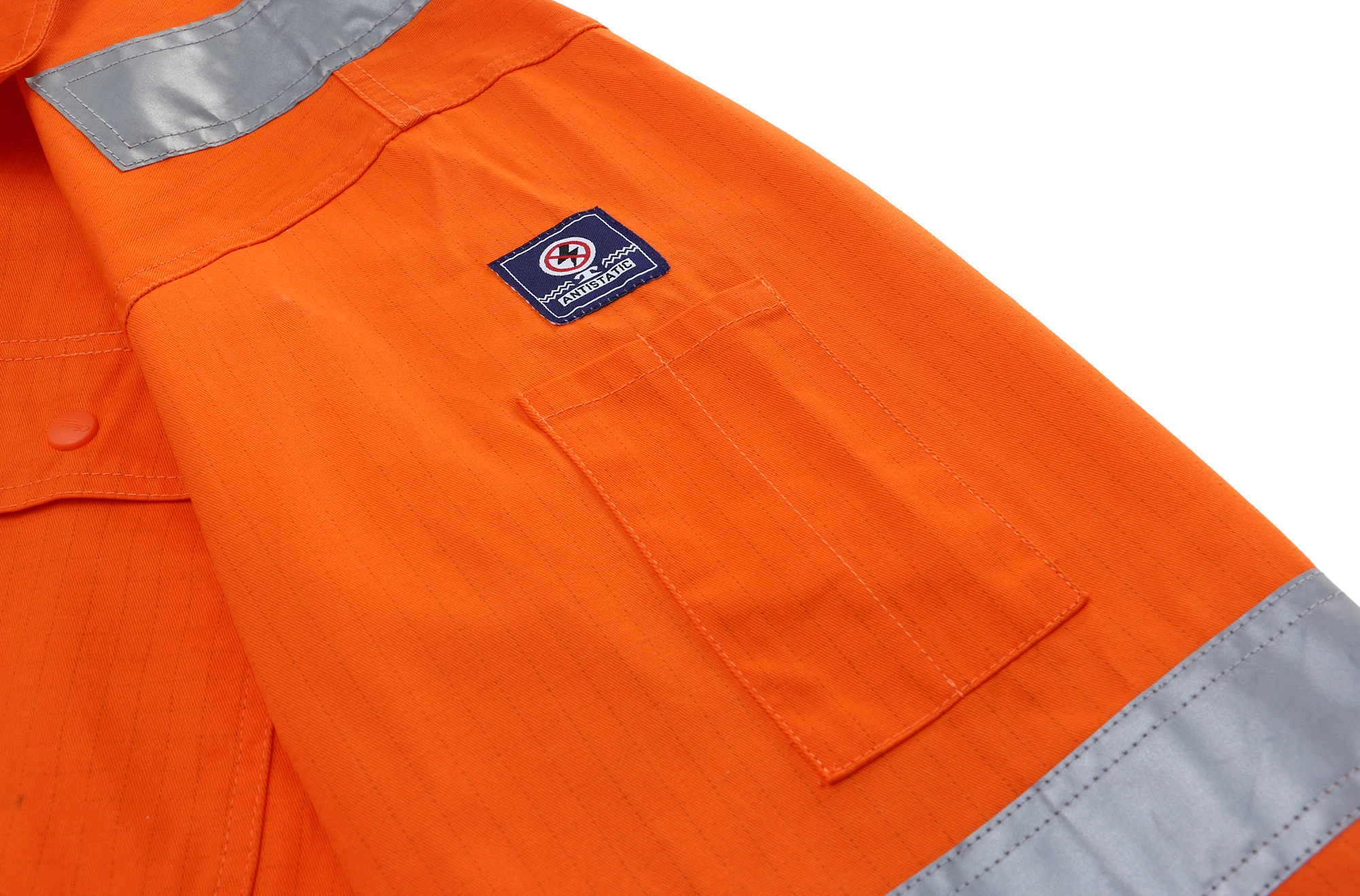
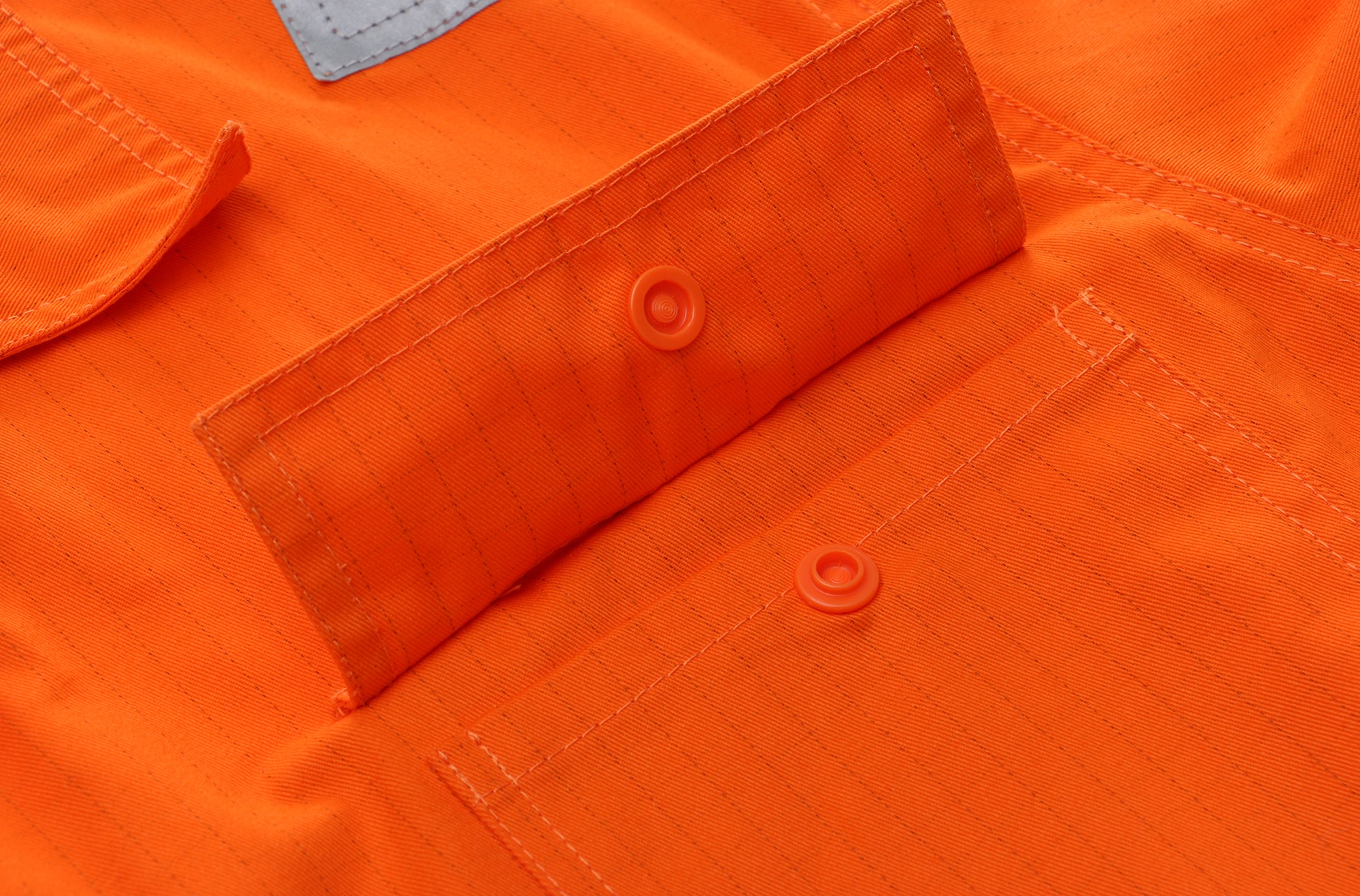

This anti-static coverall is perfectly suited for offshore operations and is ideal for environments such as chemical tankers, LNG carriers, and oil tankers. The ergonomic design optimizes the internal structure of the garment, allowing for greater flexibility when squatting, standing, and climbing, which facilitates limb movement, significantly reduces fatigue during work, and improves efficiency. At the same time, the garment offers a more attractive, comfortable, and stylish fit. The fabric is made from anti-static mesh fibers that rapidly dissipate static electricity from the body’s surface. It is certified under the OEKO-TEX STANDARD 100 for environmental safety and features anti-pilling properties, rapid moisture absorption, and pre-shrink treatment, making it suitable for prolonged wear by crew members. The large lapel design exudes a dignified and sophisticated appearance, while reflective strips enhance visibility in the workplace, ensuring safety. The uniform also features 8 pockets (including a phone pocket) and two-way No. 5 resin zippers, allowing for unrestricted movement.
pure cotton mesh anti-static
GB 12014-2019
S M L XL XXL 3XL 4XL 5XL 6XL
We offer cloud warehouse services, storage, and fulfillment services within China, with shipments to various ports. For international shipping, you can choose from sea freight, air freight, or express delivery to your specified destination.
Read More
CE certified
The CE marking indicates compliance with fundamental health and safety requirements for European Directive 89/686.
The directive divides PPE into three categories, each subject to a different conformity evaluation system:
Category 1: the manufacturer drafts a technical file and affixes the CE marking without the intervention of an external notified body.
Category 2: the manufacturer affixes the CE marking after the notified body has performed a type examination on the basis of a technical file.
Manufacturers decide whether the inspection system focuses on product sampling or on an audit of the quality system. Following inspection, the CE marking and the number of the notified body that conducted the inspection must be affixed to the product.
The European Commission describes the CE marking as a “passport” that allows manufacturers to circulate industrial products freely within the internal market of the EU. The CE marking certifies that products have met EU health, safety, and environmental requirements that ensure consumer and workplace safety. All manufacturers in the EU and abroad must affix the CE marking to products covered by the “New Approach” directives to market their products in Europe. Once a product receives a CE marking, it can be marketed throughout the EU without modification.
Most products covered by New Approach Directives can be self-certified by the manufacturer and do not require review by EU-authorized independent testing/certifying companies (i.e., Notified Bodies). To self-certify, the manufacturer must assess the conformity of the products with applicable directives and standards. While the use of EU harmonized standards is voluntary, in practice the use of EU standards is the best way to meet the requirements of the CE marking directives. This is because the standards offer specific guidelines and tests to meet safety requirements, while the directives, general in nature, do not.
The manufacturer may affix the CE marking to their products following the preparation of a declaration of conformity, which indicates that the product meets applicable requirements. Manufacturers must maintain a technical file to prove conformity and they, or their authorized representatives, must provide this together with the declaration of conformity when requested by EU authorities.
If a directive requires the involvement of a Notified Body in the conformity assessment procedure, its identification number must be displayed behind the CE logo. Doing this is the responsibility of the Notified Body.
CE marking is mandatory for certain product groups within the European Economic Area (EEA; the 28 member states of the EU plus EFTA countries Iceland, Norway, and Liechtenstein) plus Switzerland and Turkey. The manufacturer of products made within the EEA and the importer of goods made in other countries must ensure that CE-marked goods conform to all applicable standards.
By affixing the CE marking on a product, a manufacturer is declaring, at its sole responsibility, conformity with all of the legal requirements to achieve CE marking that will permit the free movement and sale of the product throughout the EEA.
Read More
EN 20471: 2013
(EN 20471:2013 supersedes EN 471:2003/A1:2008.)
In contrast to EN 471, ISO 20471 has one value (x), which indicates the class of the product. Since reflection is featured only in the highest class, the value (y) expires in ISO 20471. High-visibility clothing requirements increase visibility during the day, twilight, in the dark, and in poor weather conditions. High-visibility clothing has a fluorescent surface and retroreflective material that meet the certification requirements of three different classes. The applicable performance class can be obtained using a single garment or a clothing ensemble (e.g., jacket and trousers). Performance requirements are included for colour, retroreflection, and minimum HV surface area. The standard also includes direction concerning where to place HV features on protective clothing.
Classification:
● X: ratio of fluorescent background material to retroreflective material (3 levels, where 3 is best)
Read More
EN ISO 13688
(EN ISO 13688:2013 supersedes EN 340:2004.)
The standard specifies general performance requirements for ergonomics, innocuousness, size designation, aging, compatibility, and marking of protective clothing and the information to be provided by the manufacturer with the protective clothing. This standard shall be used in combination with other standards containing requirements for specific performance.
More detailed, general requirements for protective clothing include:
Innocuousness of the materials to the wearer.
Ergonomic requirements for the clothing including comfort, weight, and design considerations.
The effect of wear and tear on product performance (e.g., colour alteration, cleaning, and changes in dimension).
Sizing is based on height, chest and waist circumferences, is standardized in accordance with EN 3635, and is detailed in the sizing pictogram that is included on each product’s label. EN ISO 13688 specifies that sizing intervals should not be standardized and instead favors a “flexible” approach.
● Labels must be visible and legible, be written in the official language of the country of destination, and include the following information:
a) Name, trademark, or other means of manufacturer identification
b) The product’s commercial name or codec) A pictogram and size designation according to EN 3635
d) Reference to the specific EU protective clothing standard
e) A pictogram showing the hazard the product is designed to protect the wearer against and the product’s performance level
f) Composition, care, and washing instructions using care symbols in accordance with EN 3758
● Instructions for the wearer must be written in the official language of country to which the products are being shipped and must include the following information:
a) Identification and address of manufacturer
b) Identification and address of the notified body (PPE categories 2 and 3)
c) Reference to the specific EU protective clothing standard
d) A pictogram showing the specific hazard the product is design addresses and the product’s performance level
e) The product’s material composition
f) Information to the wearer specifying safety checks that must be conducted prior to use, the purpose and limitations of the product (e.g., how long the product can be used in specific working conditions), and storage, maintenance, and cleaning instructions
Read More
EN 1149-5: 2018
EN 1149-5:2018 specifies material and design requirements for electrostatic dissipative clothing, including hoods and caps, that is worn as part of a total earthed system for protection against incendiary discharges in areas where there is a risk of explosion (ATEX Environments)
Please note that this standard does not encompass protections against hazards associated with mains voltages and oxygen enriched workspaces. This European Standard is not applicable for protection against mains voltages.
The test methods used in EN 1149-5:
EN1149-1: 2006 measurement of surface resistivity (surface resistance)
EN1149-3: 2004 measurement of charge decay
EN1149-4: garment test method (standard currently under development)
Read More
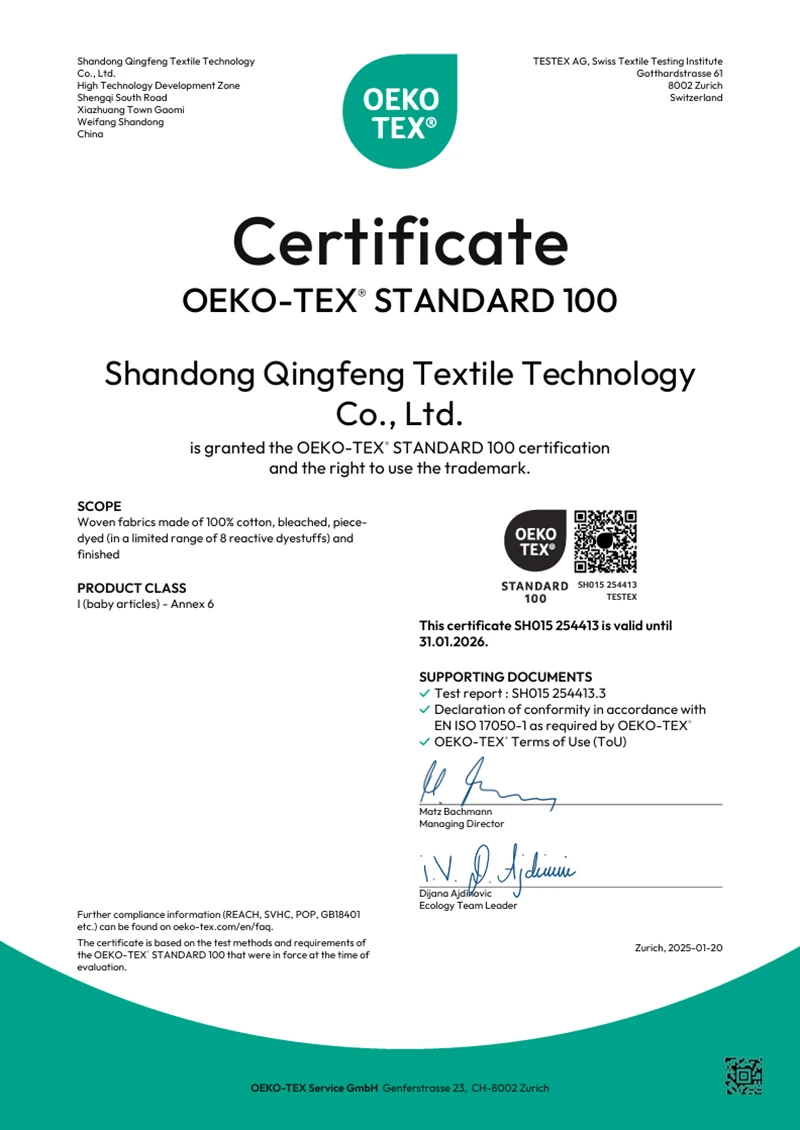
OEKO-TEX
| Fabric | pure cotton mesh anti-static |
| Ingredients | 98% cotton 2% conductive wire |
| Gram weight | 230±5g |
| Colour | white, orange |
| Yarn count | 20*16 Density: 128*60 |
| Reflective material | T/C bright silver |
| Size | 165-200 |
| Executive standard | GB 12014-2019 |
| Safety category | GB18401-2010 Class C |
| Measurement/CM | Model | |||||||
|---|---|---|---|---|---|---|---|---|
| M/165/88A | L/170/92A | XL/175/96A | 2XL/180/100A | 3XL/185/104A | 4XL/190/108A | 5XL/195/112A | 6XL/200/116A | |
| Chest | 118 | 122 | 126 | 130 | 134 | 138 | 142 | 146 |
| Shoulder Width | 49.4 | 50.6 | 51.8 | 53 | 54.2 | 55.4 | 56.6 | 57.8 |
| Waist (Finished) | 94 | 98 | 102 | 106 | 110 | 114 | 118 | 122 |
| Waist (Stretched) | 114 | 118 | 122 | 126 | 130 | 134 | 138 | 142 |
| Sleeve Length | 58.5 | 60 | 61.5 | 63 | 64.5 | 66 | 66.5 | 67 |
| Inseam | 101.5 | 104 | 106.5 | 109 | 111.5 | 114 | 115.2 | 116.5 |
| Hip | 116.5 | 120.5 | 124.5 | 128.5 | 132.5 | 136.5 | 140.5 | 144.5 |
| Thigh (1/2) | 36 | 37.1 | 38.3 | 39.5 | 40.6 | 41.7 | 42.8 | 43.9 |
| Recommended Height/CM | 160-168 | 165-175 | 170-180 | 175-185 | 180-190 | 185-190 | 190-195 | 195-200 |
| Recommended Weight/KG | 55-60 | 60-70 | 70-80 | 80-85 | 85-95 | 95-100 | 100-105 | 105-110 |
| Corresponding European Size | 44 | 46 | 48 | 50 | 52 | 54 | 56 | 58 |
Please note: Since everyone has different preferences regarding fit and body types vary, people of the same height and weight may require different sizes. Even for the same person, the ideal size for tops and bottoms may differ. If you have any special requests, please feel free to contact our customer service team—we’re happy to assist you.
Screen Printing: $0.35 per piece for the front, $0.50 per piece for the back; a setup fee of $16 applies for orders of 100 pieces or fewer. Each color counts as one screen; an additional $0.25 is charged for each additional color;
Embroidery: $0.35 per piece for the front, $0.80 per piece for the back; a setup fee of $16 applies for orders of 100 pieces or fewer;
Heat Transfer: $0.50 per piece for the front, $0.95 per piece for the back; no setup fee;
Hard Hat Printing: Printing price calculated based on logo and placement; $16 setup fee per hat; one color per plate;

Please leave your information; our professionals will contact you promptly.


No. 12, Liandong U-Valley, 368 Huanghe West Road, Huangdao District, Qingdao
Copyright © 2026 by Qingdao CHUANQI Escort Technology Co., Ltd. All Rights Reserved